Why a log helps
When water reaches inventory, memories of what was where fade fast. Different people remember different pallets, and shipping records do not always match what was physically on the rack. A single loss log, started early and kept by one owner, becomes the source of truth for the claim, for supplier credits and for internal reconciliation.
The layout below is deliberately plain so it can be created in a spreadsheet, on a clipboard or on a printed form. The key is consistent categories and honest entries. If a number is an estimate, say so.
A final tip concerns versions. Spreadsheets multiply quickly when several people are involved, and by the end of an event there can be four copies with different totals. Decide in advance where the master file lives, who can edit it and how changes are tracked. If you use paper, scan it at the end of each shift so there is a dated backup. When a question arises later about who counted what, a dated trail is far better than recollection.
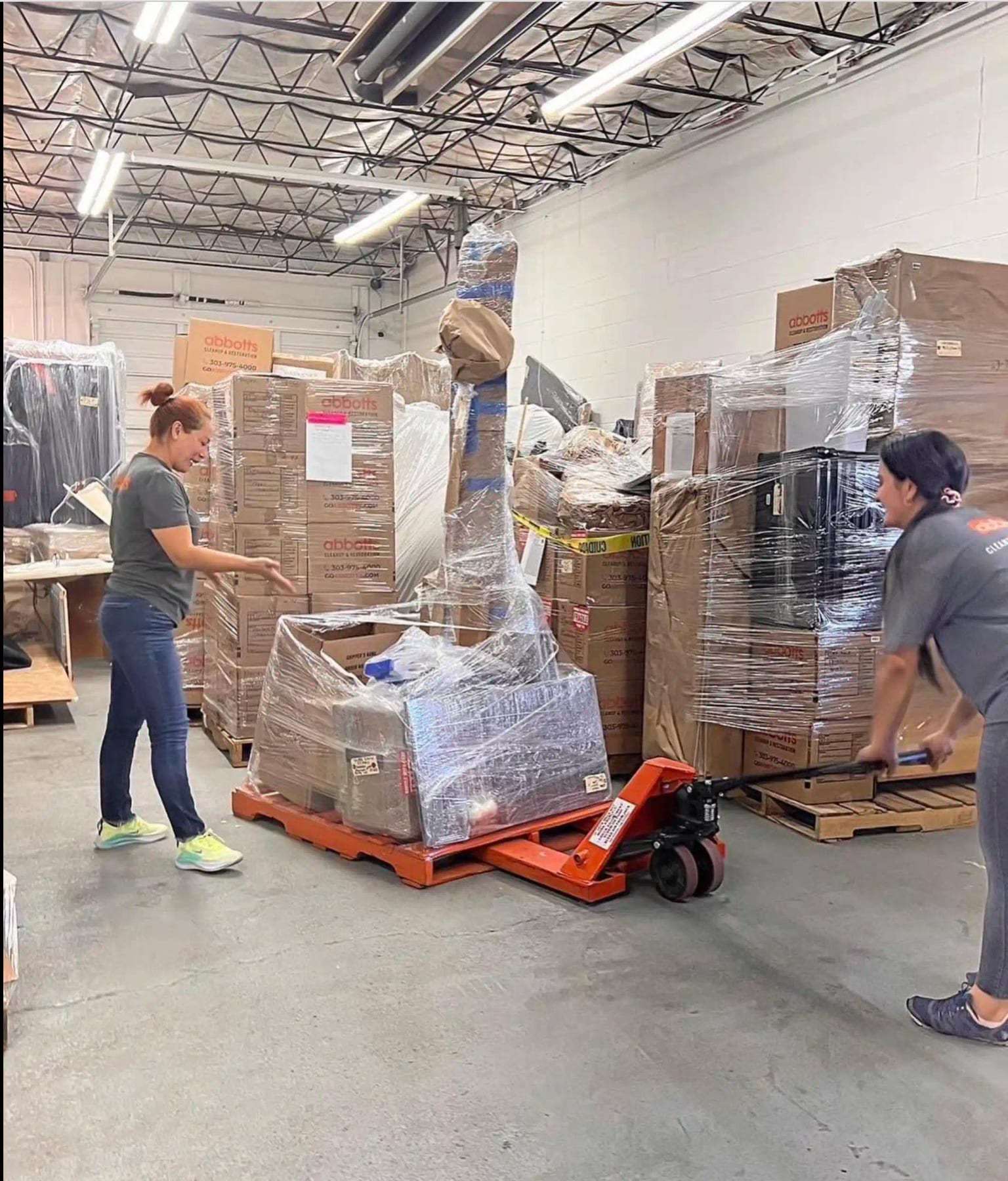
Warehouse contents wrapped on pallets during a pack-out. Shown to illustrate the work described; not a job for this site or at any address named here.
Suggested columns
- Column
- Date and time
- What to enter
- When the item was assessed
- Example format
- Date plus time of day
- Column
- Location
- What to enter
- Zone, aisle, rack and tier
- Example format
- Zone letter and bay number
- Column
- Item or SKU
- What to enter
- Product identifier
- Example format
- As in your system
- Column
- Quantity
- What to enter
- Units, cartons or pallets
- Example format
- Number with unit
- Column
- Condition
- What to enter
- Dry, damp, soaked or contaminated
- Example format
- One of four terms
- Column
- Group
- What to enter
- Keep, hold or discard candidate
- Example format
- One of three terms
- Column
- Photo reference
- What to enter
- File name or photo number
- Example format
- Plain file name
- Column
- Notes
- What to enter
- Anything unusual
- Example format
- Free text
Add or remove columns to suit your inventory system.
Good habits for the log
Condition terms to standardize
- Dry
- No visible or measurable moisture on goods or packaging.
- Damp
- Packaging or surfaces are moist but contents appear unaffected.
- Soaked
- Goods or packaging were saturated or submerged.
- Contaminated
- Contact with dirty water, chemicals or unknown liquids is suspected.
When to update the log
- First shift
- Start the log; record initial counts and photos.
- Each following day
- Update conditions and groups as goods are reviewed.
- After insurer or supplier input
- Record decisions and who made them.
- At close-out
- Reconcile with shipping records and finalize.
Common questions
Should the log include items that are fine?
Yes, at least for items in the affected zone. A record of what was dry helps show the boundaries of the loss.
Who sees the log?
Typically operations, finance and the insurer. Share only what is needed.
General information for Commerce City, not a quote or professional advice. In an emergency, call 911.