Why slabs behave the way they do
Concrete takes up some water, but compared with carpet or drywall it gives much of it back at the surface. In a warehouse, that means the first job is volume: moving a lot of water off a lot of floor. Joints, cracks, coatings and low spots change how water collects, and a slight slope can pool liquid at one end of a bay.
Extraction methods are usually described by scale. Small handheld units suit offices. Larger portable and truck-mounted systems exist for open floors. Which approach makes sense depends on depth, area, access for equipment and the debris in the water. A general reader does not need to select equipment, but understanding the categories helps when a professional explains a plan.
Large open floors also raise practical questions that smaller jobs do not. Access matters: equipment has to get past racking, columns and dock levelers, and power or fuel sources have to be arranged safely. Water that collects under staged pallets or in aisle corners may need to be squeegeed out by hand. When the water came from outside, debris and silt settle as it recedes and can clog pumps or leave a film on the floor, so cleaning can take as long as removal. Asking how a plan handles these details is more useful than asking about a single machine.
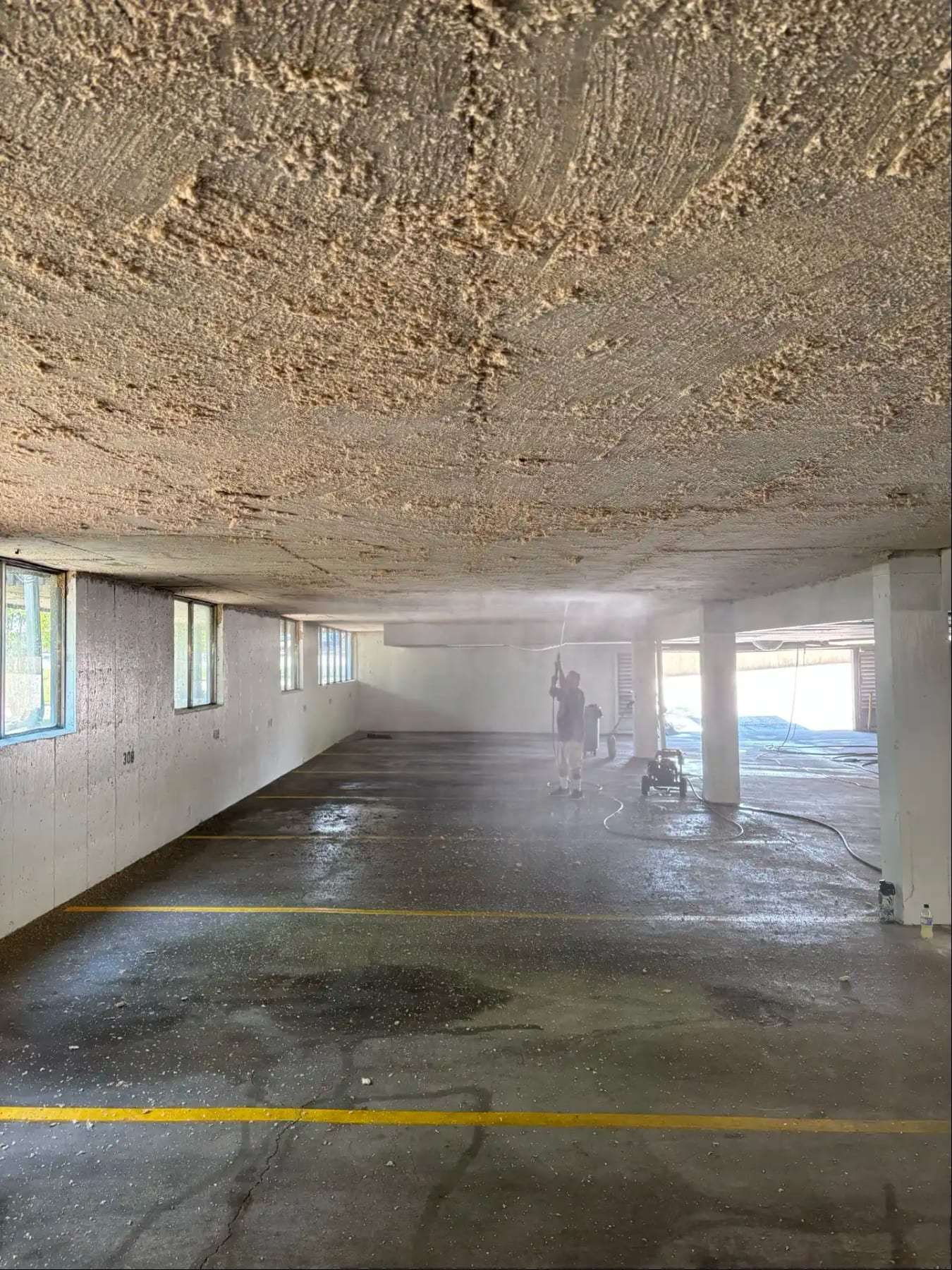
Wet floor of a parking garage with standing water along the stalls. Illustrative only: this photo is not from a job tied to this site or a specific address.
Terms you may hear
- Extraction
- Physically removing standing and surface water, usually the first mechanical step.
- Squeegeeing
- Pushing water toward a collection point so it can be pumped or vacuumed.
- Air movement
- Fans that move air across wet surfaces to help moisture evaporate.
- Dehumidification
- Removing moisture from the air so surfaces keep drying instead of stalling.
- Moisture reading
- A measurement taken in a material to track whether it is getting drier.
General sequence on a flooded slab
Clear the floor
Move pallets, carts and debris so water and equipment can travel.
Remove standing water
Pump or vacuum the bulk of the water, working toward low points.
Address surface residue
Mud, grit or chemical film may need cleaning before the floor is considered done.
Dry the building
Use air movement and dehumidification, especially where office walls and stored goods share the air.
Verify
Take readings over several days until the floor and adjacent materials are in a normal range.
Common questions
Does concrete need to be replaced after a flood?
Rarely because of water alone. The questions are usually about coatings, contamination and structural conditions, which a qualified professional assesses.
Why do dehumidifiers matter in a warehouse?
Moist air slows drying for everything in the building, including office areas and stored materials.
General information for Commerce City, not a quote or professional advice. In an emergency, call 911.