Comparing, not trusting on sight
Warehouse water losses are large enough that the choice of contractor matters. The right company for a small office leak may not be set up for tens of thousands of square feet of slab, racked stock and shared air. This page does not recommend or represent any company; it offers a way to compare whoever you are considering, and a reminder to verify statements independently.
Good comparisons rest on specifics. A company that can explain its plan in terms of your building, its zones, its equipment needs and its documentation is easier to evaluate than one offering general reassurance. Written scopes and clear descriptions of who does what are better indicators than confident language.
Timing pressure is real, so build the comparison before you need it. A short list of companies, with notes on the questions above and the answers received, can sit in the emergency binder. When an event happens, you are choosing from a prepared list instead of searching from scratch while water is spreading. Revisit the list each year, because company details, staffing and the facility itself will change, and ask your insurer or broker whether they have preferences you should know about in advance.
Questions worth asking
Ask the same questions of each company so answers can be compared side by side.
- Who will actually perform the work: their own employees, or subcontractors?
- What experience do they have with buildings of this size and type?
- How will they document conditions, equipment and progress?
- What credentials do they hold, and how can you verify them with the issuing body?
- How do they handle stored goods and racking?
- What is their plan if hazardous materials or contamination are found?
- How do they coordinate with insurers and adjusters?
- What will be in the written scope, and how are changes handled?
What to verify versus what to just hear
Some answers can be checked; some are only claims.
Verify independently
- Credentials and registrations with the issuing organization
- Insurance coverage through a certificate sent by the insurer
- References you contact yourself
- Business registration with the state
Treat as a claim until shown
- Statements about speed or availability
- General statements about quality
- Promises about insurance outcomes
- Descriptions of equipment capacity without specifics
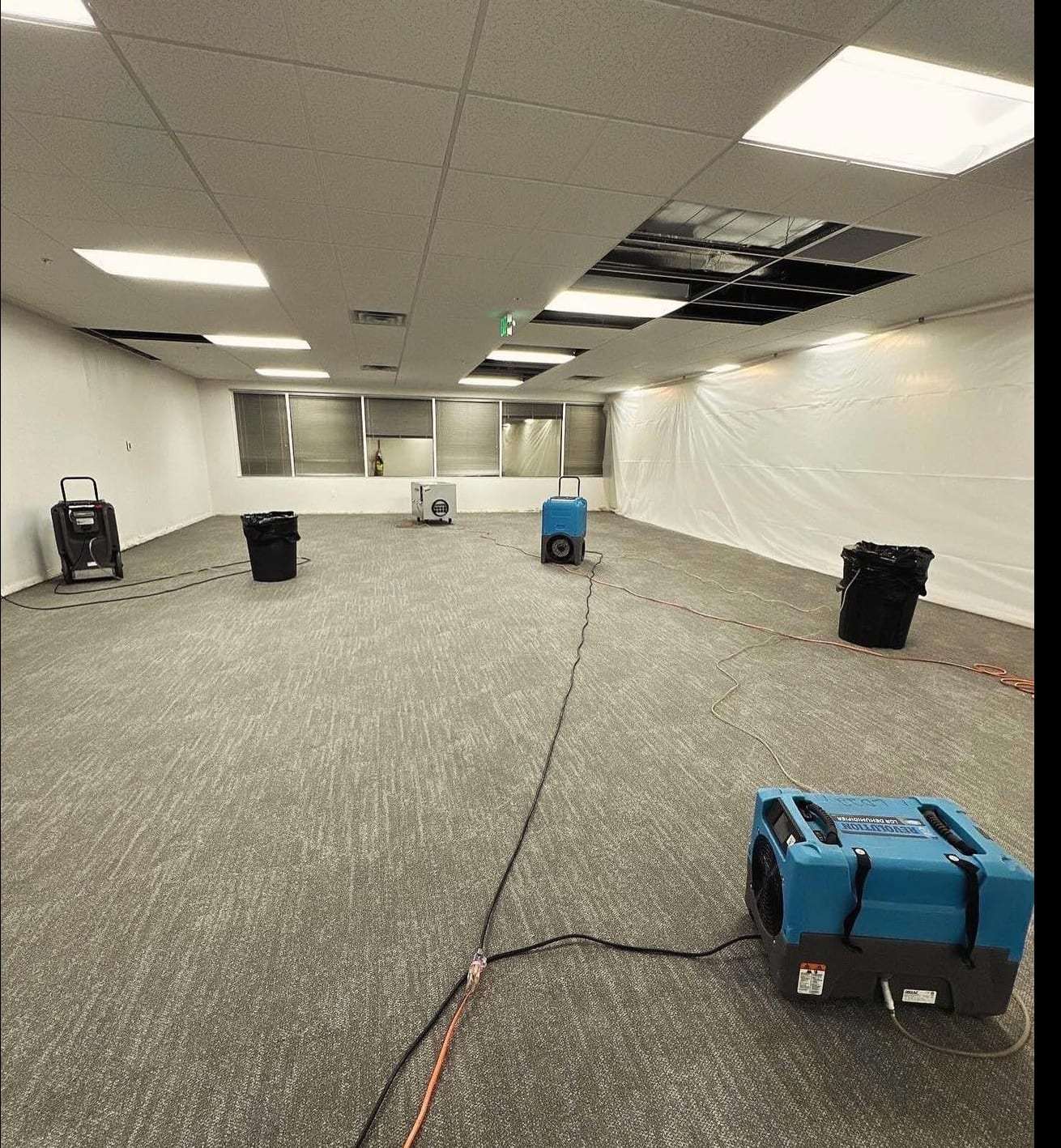
Empty office with containment and dehumidifiers drying the carpet. This photo illustrates the topic and is not from any address mentioned on this page.
Common questions
Should the insurer pick the contractor?
Policies vary. Ask the insurer whether they require or prefer particular vendors, and understand that you may have a choice.
Is the lowest bid the best?
Not necessarily. Compare scope, documentation and responsibilities, not just the headline figure.
General information for Commerce City, not a quote or professional advice. In an emergency, call 911.