Warehouses · Distribution · Industrial
Warehouse Flood Cleanup and Water Extraction in Commerce City
Large floors, high ceilings, racking, and inventory: warehouse flooding needs extraction and drying sized for the building, and a plan that keeps operations moving.
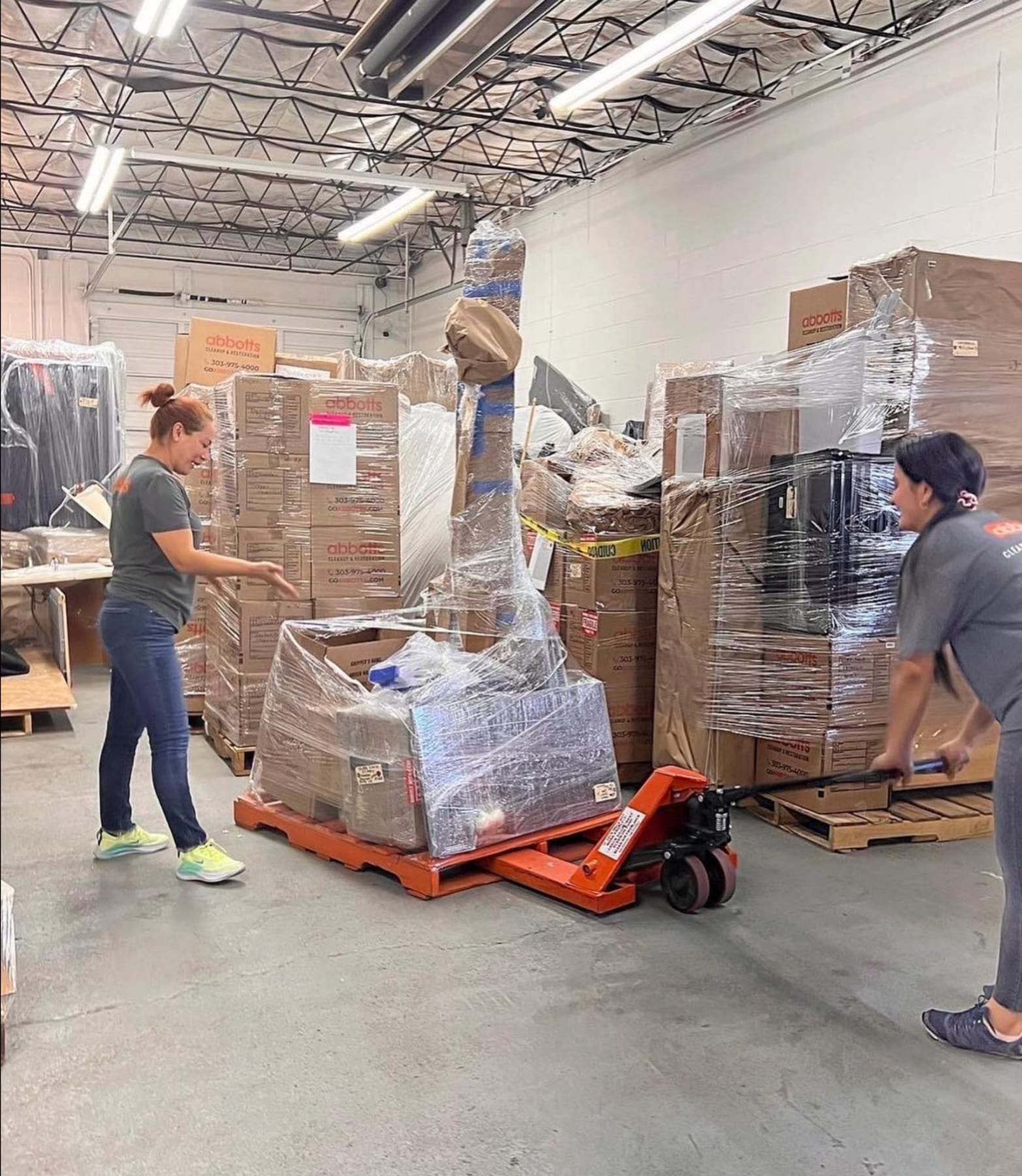
Warehouse water damage is a different scale
-
POINT 01
In a warehouse, a broken supply line or failed sprinkler can spread water across thousands of square feet of slab, under racking, into office build-outs, and around inventory and equipment.
-
POINT 02
Concrete floors don't absorb much, but pallets, cardboard, drywall office walls, and insulation do.
-
POINT 03
Commercial water damage response in a warehouse usually means removing water across large open areas, protecting what's still dry, drying office areas and wall cavities, and documenting the loss for insurance and business-interruption claims.
A Commerce City guide to warehouse flooding. Ask any company whether it uses in-house crews and how soon it can realistically arrive.
Warehouse flood response
A good response is planned around the building's size and operations.
-
STEP 01
Assess
Map the affected area, office spaces, and building systems.
-
STEP 02
Extract
Remove water from slab, offices, and loading areas.
-
STEP 03
Protect
Help isolate dry areas so operations can continue where possible.
-
STEP 04
Dry
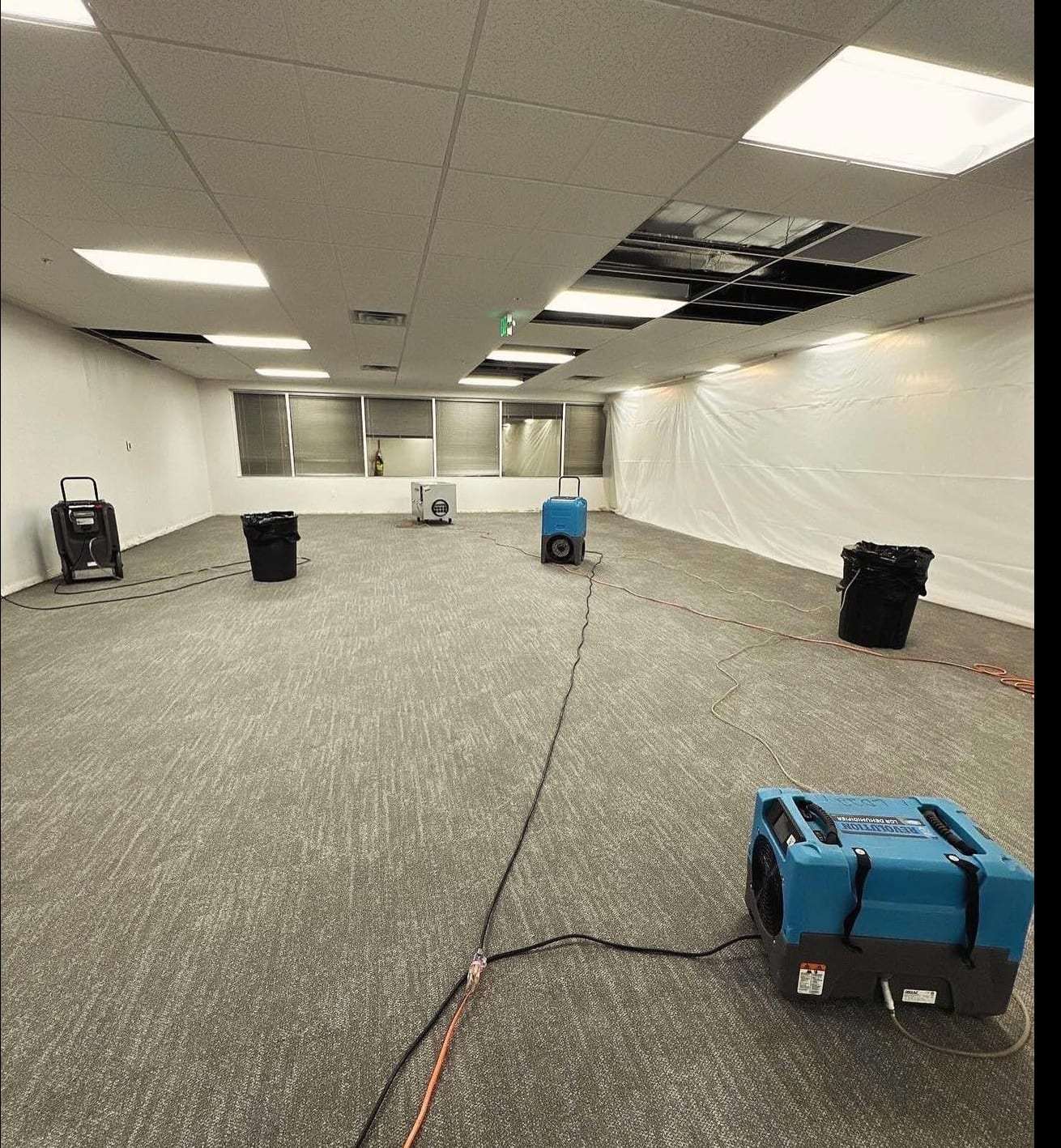
Dry office walls, cavities, and materials with commercial equipment and daily monitoring.
-
STEP 05
Document and repair
Ask for complete documentation, then schedule repairs once the building is dry.
A continuity plan
Large open floors dry faster than finished rooms, but a warehouse can't stop shipping while they do. Agree on zones: one bay dries while operations shift to another. Equipment placement, power, and how drying is checked between shifts are planned around the operations that keep running.
Common warehouse water sources
- Fire sprinkler line breaks, especially dry-pipe systems in cold dock areas.
- Frozen and burst supply lines near loading doors.
- Roof drains and leaks over large open bays.
- Restroom and break-room plumbing failures in office areas.
- Storm water entering through dock doors.
MANIFEST
For facility and operations managers
- First
Shut off the source and follow your fire protection procedures for sprinkler events.
- Next
Move inventory and equipment off the floor where it's safe.
- Then
Photograph affected areas and inventory.
- After that
Call your insurer and a commercial restoration company you have checked.
Document the inventory before it moves
Damaged product is often the biggest part of a warehouse claim. It's also the easiest to lose track of once crews start moving pallets.
- Photograph wet product in place, by location, before anything is moved.
- Record SKU, lot or pallet ID, quantity and how far the water reached.
- Separate wet, damp and dry stock; don't put damp pallets back into racking.
- Keep damaged goods until your insurer says they can be discarded.
Commercial access, agreed up front
ITEM 01
Docks and doors
Which dock doors equipment and debris can use without blocking inbound and outbound loads.
ITEM 02
Racking
Whether bottom-rack product is wet, and whether pallets must be moved before extraction under racks.
ITEM 03
Equipment
Forklift and material-handling traffic routes kept separate from hoses and drying equipment.
ITEM 04
Power
Which circuits are safe to use for drying equipment, and whether temporary power is needed.
Commerce City's industrial and distribution base
Commerce City, in Adams County directly northeast of Denver, is one of the metro area's main industrial and logistics centers, with warehouses, distribution facilities, and manufacturing along I-270, I-76, and the rail corridors.
Many of these buildings are large open structures with dock doors exposed to winter weather and office build-outs inside, and that combination drives most warehouse water losses.
- Ask any company to confirm that your Commerce City facility is in its service area.
- Dry-pipe sprinkler systems need regular maintenance before winter.
- Hazardous-material spills require separately licensed environmental contractors.
- The same advice applies to facilities in nearby Denver, Henderson, and Brighton.
ZIP codes served: 80640 (Henderson), 80022 (Commerce City).
Also nearby: 80216, 80266, 80207, 80229, 80238, 80205, 80221, 80202, 80220, 80211, 80260, 80206, 80239, 80218, 80030, 80203, 80010, 80233.
Commerce City warehouse situations
| Ref | Situation | What happens |
|---|---|---|
| CASE 01 | Dock-area sprinkler freeze | A dry-pipe sprinkler line near the docks freezes and breaks overnight, flooding a section of the floor. |
| CASE 02 | Roof drain overflow | A clogged roof drain during a storm sends water through the roof onto racked inventory. |
| CASE 03 | Office build-out leak | A water heater in the office mezzanine fails, soaking drywall and carpet in the offices below. |
Go deeper on warehouse water damage
Guides and worked examples for docks, racking, sprinkler events and inventory records.
Explainers18
- Frozen and burst supply lines near loading docks
- Business interruption planning for warehouse flooding
- Choosing a commercial water restoration company
Planning tools9
- Questions to ask any outside water restoration company
- Dock door storm preparation checklist for warehouses
- Warehouse flood contact sheet and roles worksheet
Send facility details
This form is not connected. This website is a draft preview: no business has been confirmed to receive requests, so the fields below are switched off and nothing can be sent. In an emergency, call 911.
Warehouse questions
What equipment does a large warehouse floor need?
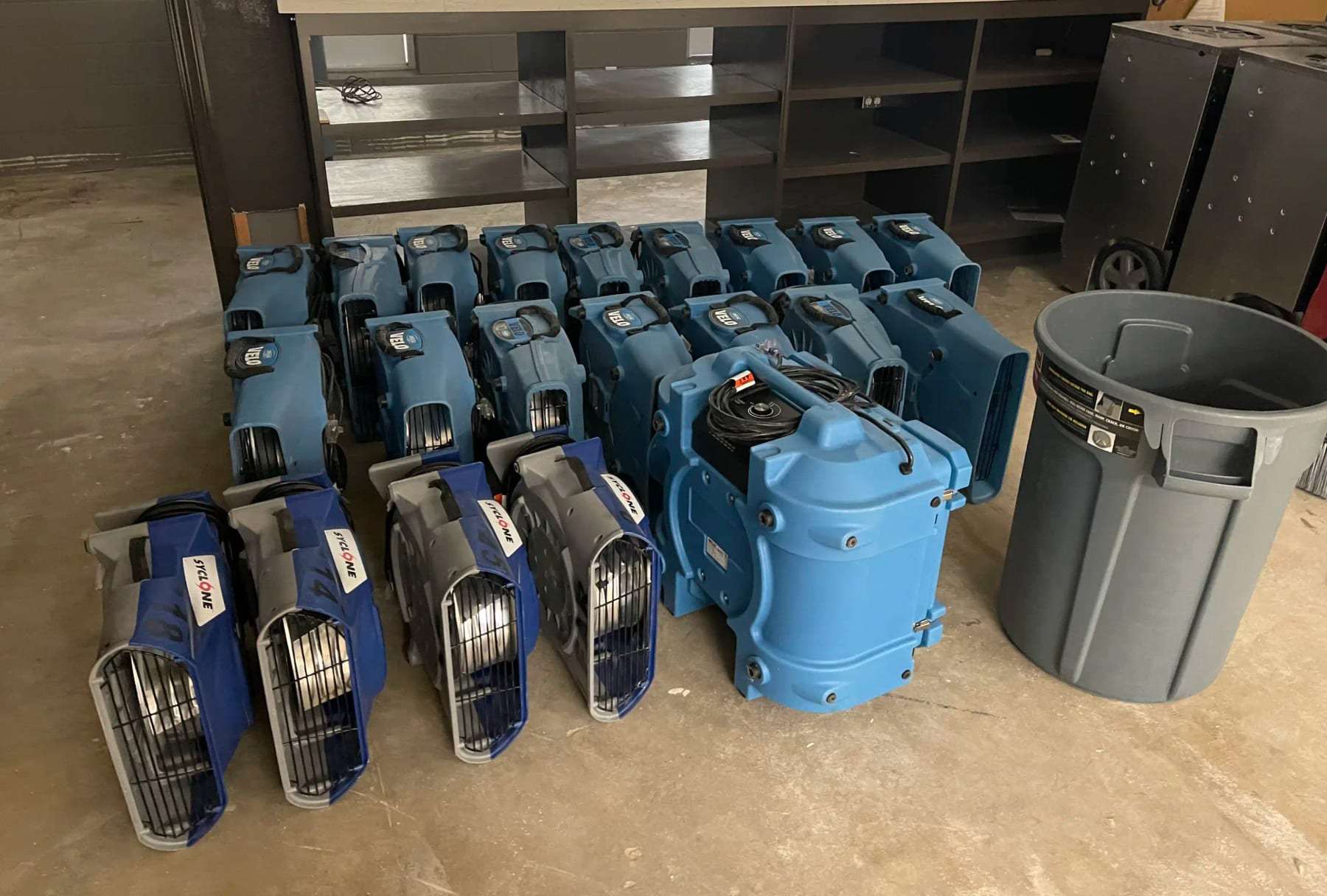
Usually truck-mounted extraction and commercial drying equipment. Describe the building size on the first call so the right equipment is brought.
What about wet inventory?
Move it off the floor where safe. Salvage or replacement decisions are often made with your insurer; documentation helps.
Is a chemical spill the same as a water cleanup?
No. Hazardous-material spills require licensed environmental contractors and may need to be reported. Water damage restoration is a separate job.
Can operations continue during drying?
Often in part. Ask for the work to be planned so unaffected areas keep operating.
What records should the warehouse ask for?
Photos, moisture readings, and an itemized record of the work performed for insurance and business-interruption claims. The insurer decides coverage.
Will a company answer after hours?
Many advertise it. Ask whether calls go to the company's own staff or an answering service, and how soon a crew can realistically reach Commerce City.
Who decides what inventory is a loss?
You and your insurer. Product owners and carriers set the rules for food, pharmaceutical and other regulated goods. The restoration company's role is to dry the building and document conditions; it doesn't decide whether goods can be sold.
Water in your Commerce City warehouse?
Shut off the source, follow your fire protection procedures, photograph inventory in place, call your insurer, and choose a commercial restoration company you have checked.
No phone line yet